
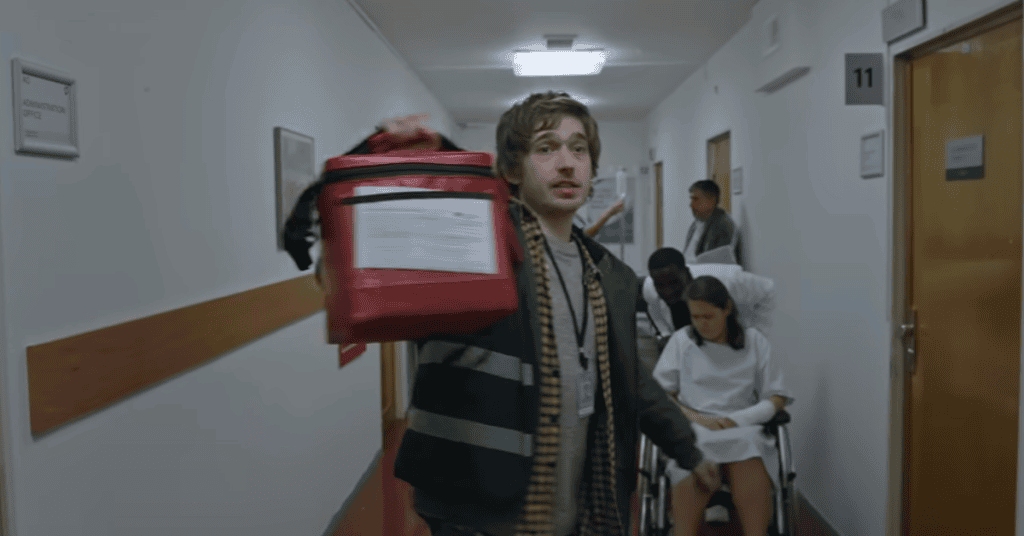
Movies do not always showcase organ donation positively; organ donation instead is used as a plot setup for exciting action or horrific zombie madness. That is the case with Hollywood’s two latest releases in September, Runner and Resident Evil.
Runner (not to be confused with The Runner, starring Gal Gadot that came out earlier this month) is an action comedy featuring Alan Ritchson and Owen Wilson. Ritchson, of Reacher fame, plays a soldier who is helping Wilson’s character, a medical courier, deliver a “rare organ” to a terminally ill girl while being pursued by a cartel that wishes to use the organ to save their boss’ ailing mother.
In the film, they’re using “rare organ” to reflect the extremely rare blood type between the donor and recipient, Rh Null. Beyond that, all organs for transplant are rare in that less than 1% of people will die in such a manner to be eligible organ donors, and not every organ is medically viable for donation. On the other side, the need is great: more than 110,000 men, women, and children in the United States are waiting for a life-saving organ transplant.
Obviously, Runner is Hollywoodized, playing off of that fear of waking up in an ice bath with your kidneys missing. However, in the U.S., the organ donation system is one of the most highly regulated fields of medicine. First responders and doctors do not kill people for their organs, and organ procurement organizations, or OPOs, do not pressure doctors to kill people for their organs.
There are also numerous medical steps necessary from the recovery team to maintain the viability of an organ once it’s removed from the body that Hollywood isn’t going to get into.
Ritchson, incidentally, previously starred in a very positive organ donation film, 2024’s Ordinary Angels, now on Netflix, about Kentucky’s “snow baby,” who received a life-saving liver transplant, thanks to a steadfast father, played by Ritchson, and the community banding together.
The latest Resident Evil film also features a medical courier, Bryan, as the main character. In the movie, Bryan shows up at a hospital with an organ, not knowing where to take it or even what he’s carrying, which wouldn’t happen — again, there are tight controls around the transportation of organs.
Then, Bryan is offered extra money to deliver an organ beyond his usual boundaries to … Raccoon City, the infamous city in the Resident Evil universe where zombies take over. Never mind that Bryan didn’t deliver the first organ he had with him, he decided to do this.
While talking with his upset girlfriend, Bryan tells her, “I’m working! This could be some 8-year-old boy’s heart or someone’s mom’s brain.” Brains can be donated for medical research after death, but not transplanted.
Sure, nobody goes to a Ritchson action movie or a zombie movie expecting factual organ donation information, or even caring, but it’s important to talk about organ donation factually, and to advocate for the more than 110,000 people waiting.
One wrongly planted seed of misinformation that causes doubt and someone not to register as an organ donor could quite literally be the difference between life and death.
Don’t let the credits roll on someone’s life; get the facts at DoanteLife.net.